Advanced AI · Enterprise transformation
From AI Use Cases to Enterprise Transformation
AI is appearing across organisations, but mostly as isolated tools, copilots and pilots. Real transformation begins when AI changes how information moves, decisions are made and work is coordinated—not only within individual companies, but across industries and supply chains.
My books explore the technical foundations of agentic AI, its application across key sectors, and its implications for human agency. They also examine how anchor companies, financiers and investors, government, and AI providers can work together to make transformation accessible to mid-sized companies.
My goal is to show how agentic AI can strengthen businesses, develop industrial ecosystems and create broader economic value—improving margin, cash flow, capacity and resilience while expanding what organisations and people are able to achieve.

Dr. M Krishna Sridhar
Advanced AI Lead
Accenture Malaysia
Co-founder, Sparsa AI
Krishna leads agentic AI transformation across manufacturing, energy, semiconductors and banking. An author, speaker and entrepreneur, he connects advanced AI architecture with operating-model change and enterprise-scale execution.
Blog
- 170 People Showed Up. Seven Small Companies Walked Away With an Actual Contact.
- Malaysian Palm Oil Smallholders Produce Up to 40% Less Oil Per Hectare Than Estates. The AI That Could Close That Gap Is Priced for the Estate.
- Proton Buys RM3.2 Billion in Local Parts a Year. Almost None of the New Technology in It Is Malaysian.
- Malaysia's SMEs Have RM442 Billion in Financing on Tap. Only About RM203 Million of It Is Earmarked for AI.
- RM8.3 Billion, 99 Companies, One Coalition: The Blueprint Malaysia Already Has for What AI Could Do Next
- “AI Saved Us RM40 Million” Is Not a Number a Board Should Accept
- The Hidden Cost With No Line Item: What's Really Slowing Down Malaysian Factories
- Malaysia's RM28 Billion Data-Centre Bet Comes With a RM43 Billion Bill Nobody's Celebrating
- Bank Negara's AI Paper Is Still a Draft. Four Other Regulators Already Finished Theirs.
- 95% of AI Pilots Deliver Zero P&L Impact — But Back-Office Ones Don't. What's Different?
- Only 23% of Malaysian CEOs Say AI Grew Revenue — Is Even That Too High?
- 97% of Malaysian Businesses Aren't in the AI Conversation — Here's What That Costs the Country
- Malaysia's AI Adoption Hit 38% — But 67% of It Is Just a Chatbot
- Agency, Not Agents
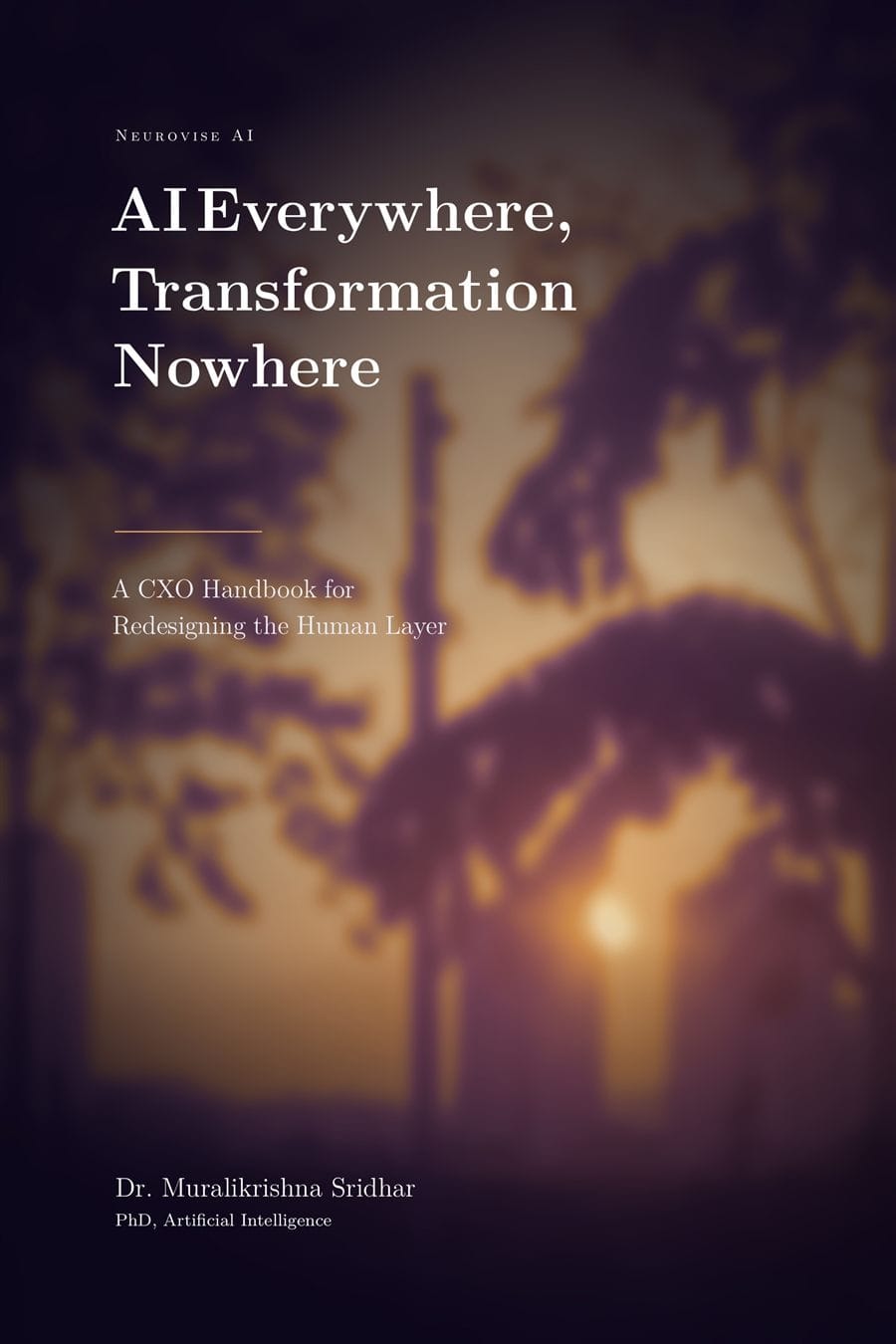
AI Everywhere, Transformation Nowhere
A CXO Handbook for Redesigning the Human Layer
Why organisations domesticate AI into point solutions—and how leaders can move from fragmented use cases to an agentic operating model.
The real economy
AI Transformation of Key Sectors
Every industry has different economics, constraints and sources of lost value. These books explore how agentic AI can transform manufacturing, banking, energy and other key sectors—connecting operational change to margin, productivity, resilience and growth. They also examine how companies, financiers, government and AI providers can work together to strengthen entire industrial ecosystems.

The Missing Middle
How agentic AI reaches the RM20 million companies Malaysia’s growth depends on — not the firms global consulting already serves. The numbers, and who has to act.

The Hidden Factory
Agentic AI as the operating model for manufacturing, with a financial translation for the board.

The Hidden Ledger
The same claim for banks: agents in the seams between sales, credit, compliance, and treasury.

Malaysia’s Palm Oil AI Transformation
Smallholders, mills and the missing middle: a yield gap that is decisions, not land.

Malaysia’s Oil & Gas AI Transformation
From the rig to the petrol pump: where time and money go missing, and where AI genuinely helps.

Malaysia’s Semiconductor AI Transformation
Huge volume, modest value: assembly and test on Malaysian soil, and the climb into engineering attention.

Malaysia’s Automotive AI Transformation
Proton and Perodua built a supplier base on purpose. Capability, not capacity, is what still has to be won.
The stack
Technical Foundations
Transformation requires an architecture capable of understanding context, coordinating across systems and acting within governed limits. These books explain the technologies and design principles behind the agentic operating model.
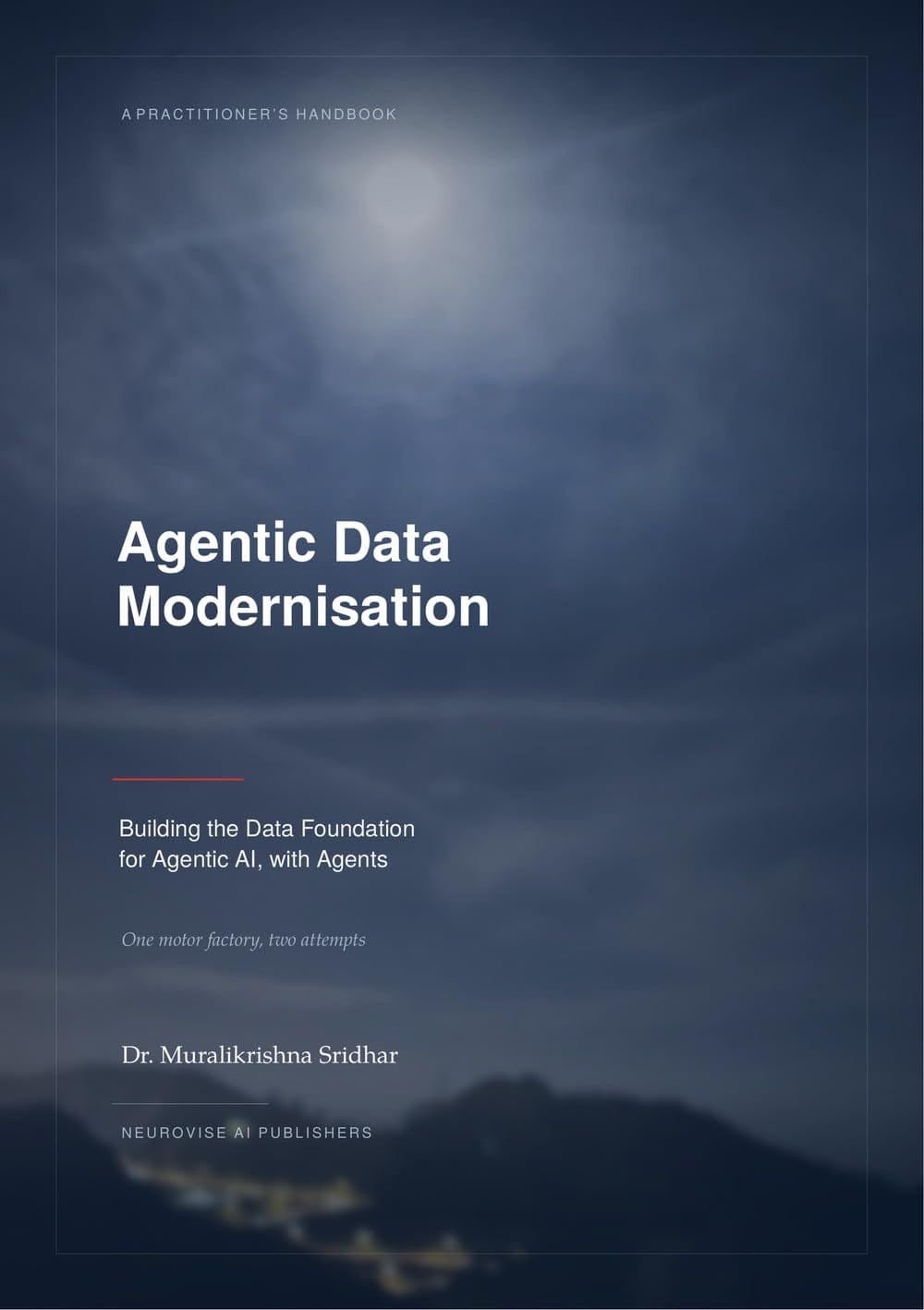
Agentic Data Modernisation
Building the data foundation for agentic AI, with agents. One motor factory, two attempts.

Enterprise Agentic AI
The full capability stack for CXOs: architecture, vendor evaluation, and what good looks like at each scale.

The Agentic Middle
The argument in ninety minutes: the coordination layer nobody designed, and why one tool per department is the expensive path.

From Transformers to Agents
How software learned to pursue goals — from attention to agents that act, and why most enterprise pilots never reach production.
The mind
Philosophical and Human Foundations
The deeper question is not only what machines can do, but what people become free to do. These books explore intelligence, consciousness, freedom and human agency in a world increasingly shaped by intelligent systems.

